
For operations managers, maintenance superintendents, and procurement heads in South Africa’s mining, quarrying, and major construction sectors, unplanned equipment downtime isn’t just an inconvenience – it’s a storm that erodes thousands of Rands in profit every single hour. This pressure reaches its peak when a critical mining truck or excavator is down, and the needed part is either unavailable, exorbitantly priced, or stuck in a weeks-long waiting period with local suppliers.
As more Chinese equipment brands like TR (Beigi), SANY, XCMG, and TONGLI prove their value across South African operations, building an efficient, reliable parts supply chain has become a core competitive advantage. This guide reveals how to smartly source parts directly from China, turning a traditional headache into your strategic edge.
Part 1: Why South African Operators Should Consider Direct Sourcing from China
- Significant Cost Advantage: By bypassing multiple layers of local distributors and dealing directly with a specialized Chinese exporter, you can often achieve 20-40% lower prices compared to local stockists. These savings translate directly to your bottom line.
- Superior Availability & Range: A professional supplier in China has access to the widest possible inventory and model coverage. This is crucial for sourcing parts for older models or special configurations where local stock is non-existent.
- Solving Emergency Breakdowns: When a part is “out of stock” locally, a direct channel with a responsive exporter can get the part to you via express air freight (7-14 days), often faster than waiting for a local supplier’s own international order.
- Controlled Quality: Partnering with a supplier that offers clear quality tiers (OEM, OEM-equivalent, certified aftermarket) puts you in control. You decide the price-to-performance balance based on the application, rather than accepting an unknown brand from a local vendor.
Part 2: The Critical Steps & Practical Tips
Step 1: Identify the Part Accurately – The Foundation of Success
- The Golden Rule: Always provide the equipment model, serial number, and clear photos of the old/failed part. A request for a “pump for a TR100 excavator” invites error. “TR100, Serial No. XXX, Main Hydraulic Pump Part No. YYY” ensures a perfect match.
- Pro Tip: Create a simple digital file for each major asset in your fleet, containing photos of its nameplate and major assemblies.
Step 2: Partner with a Professional, Direct Supplier
- Establish a Direct Relationship: The most effective strategy is to build a direct partnership with a Chinese exporter who specializes in and understands the South African market. This ensures communication efficiency, technical support, and tailored service.
- Vetting Supplier Professionalism:
- Technical Dialogue: Do they have a technical team to confirm part matches, or just salespeople?
- Market Expertise: Can they demonstrate experience exporting to South Africa? Can they explain the required documentation (Certs of Origin, etc.)?
- Transparency: Are they willing to share company information, case studies, or client references (with permission)?
- Red Flags:
- Vague communication, inability to understand specific technical requests.
- No evidence of experience with South African logistics or regulations.
- Unclear proforma invoices with hidden terms.
Step 3: Master the Logistics & Customs Clearance – The Key to South African Imports
- Choosing the Right Shipping Method:
- Air Freight: For urgent, low-volume, high-value items. Door-to-door in approximately 7-14 days.
- Sea Freight: The cost-effective choice for bulk, heavy, or planned purchases. A Full Container Load (FCL) is more straightforward than Less than Container Load (LCL). Transit time from China to Durban is typically 20-30 days.
- Clearing Customs in South Africa (Clarify with your supplier):
- Your supplier must provide a complete set of export documents: Commercial Invoice, Packing List, Bill of Lading, and a valid Certificate of Origin.
- You will need a reliable customs clearing agent in South Africa to handle duties, VAT, and any potential NRCS requirements.
- Pro Tip: Agree on the correct HS Code with your supplier upfront, as this determines the duty rate.
Step 4: Negotiation & Risk Management
- Incoterms: Understand the difference between FOB (you arrange and pay for main freight/insurance) and CIF (supplier arranges to your nominated South African port). CIF can be simpler for new importers.
- Payment Terms: The standard secure process is 30% deposit, 70% balance against copy of Bill of Lading. Terms can be negotiated as trust is built.
- Quality Assurance: For large orders, you can request factory test reports or arrange for a third-party pre-shipment inspection.
Part 3: The Myth vs. Reality of “Made in China” Quality
The “Made in China” label today spans a vast quality spectrum. The key differentiator is how your supplier manages their supply chain:
- Genuine/OEM Parts: Sourced directly from the original equipment manufacturer. Guaranteed fit and performance.
- OEM-Quality Parts: Produced in the same factories that supply the OEMs, offering identical quality at a better price point.
- Certified Premium Aftermarket: Manufactured by specialized parts makers to international standards (ISO, etc.), using materials and processes that meet or exceed OEM specifications. This is the ultimate value option.
A professional exporter will transparently present these options and provide unbiased advice based on your machine’s workload and failure history.
Part 4: Integrating Direct Sourcing into Your Maintenance Strategy
- Build a Strategic Safety Stock: Collaborate with your Chinese partner to analyze your historical breakdown data. For critical, long-lead-time parts, plan cost-effective bulk sea shipments to build a strategic local reserve.
- Develop a Partnership, Not Just Transactions: Deepen your relationship with 1-2 verified core suppliers. They will learn your entire fleet, can help with procurement forecasting, and will prioritize your emergency orders.
- Implement Digital Tracking: Use simple spreadsheets or inventory management software to track order status, shipping updates, and local stock levels of your China-sourced parts.
Conclusion: Control Your Supply Chain, Control Your Profitability
In today’s competitive South African resource sector, passively waiting for parts from a local supplier means handing over control of your equipment availability and operating costs.
Proactively establishing a direct, reliable parts pipeline from a professional Chinese supplier to your site is a vital strategic investment. It drastically reduces your unit cost, enhances supply security, and turns unpredictable downtime into planned maintenance windows – fundamentally boosting your asset productivity and operational resilience.
Ready to build a more efficient, direct supply chain for your TR, SANY, XCMG, or other equipment?
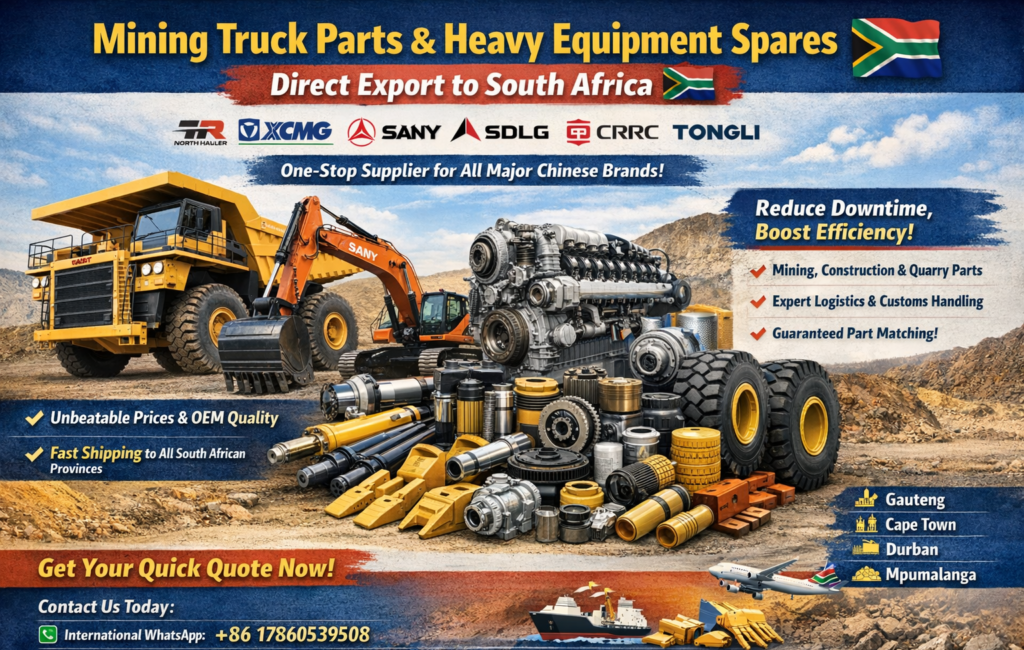
ArcherParts.com is the specialized partner you can rely on. We are a direct exporter focused exclusively on providing one-stop, heavy equipment part solutions for the South African market.
Why navigate multiple sources? We consolidate access to quality parts across all major Chinese brands.
Our expertise ensures accurate technical matching and seamless export documentation for smooth South African customs clearance.
Go directly to www.archerparts.com to submit your part list for a fast, professional, and competitive quote. Let’s discuss how we can become an extension of your procurement team.